From Air to Liquid: Commissioning the Next Generation of Data Centres
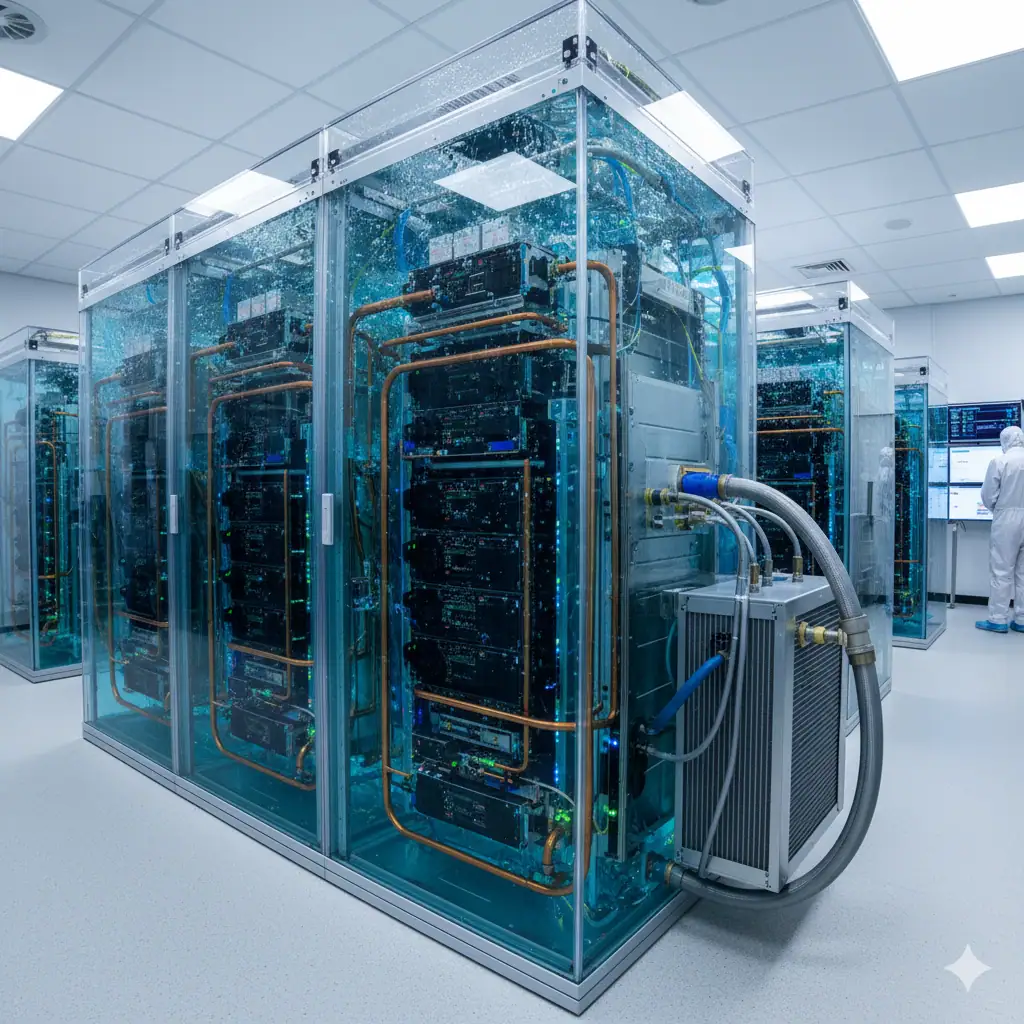
The transition from traditional air-cooled data centres to liquid-cooled infrastructure represents much more than a change in cooling technology. It changes how facilities are designed, built, operated and importantly, how they need to be tested and commissioned.
As AI and high-performance computing continue to increase rack densities and thermal loads, Direct-to-Chip (DTC) and other liquid cooling technologies are becoming an increasingly important part of next-generation data centre design.
For commissioning teams, this creates a new challenge:
How do you prove that a liquid-cooled data centre will perform as designed before millions of pounds’ worth of live IT equipment is introduced?
This is where the commissioning methodology and in particular, Level 5 Integrated Systems Testing (IST) needs to evolve.
Level 5 commissioning is where individual systems stop being viewed in isolation and the facility is tested as an integrated whole. Traditionally, Heatload has supported this stage by providing heat load testing equipment capable of simulating the electrical and thermal characteristics of IT equipment. This allows commissioning teams to place the data centre under representative operating conditions and prove how the wider infrastructure responds.
For 25 years, our heat load testing solutions have evolved alongside data centre design; from simple space heaters through to increasingly sophisticated emulators capable of producing greater heat densities while maintaining the required Delta-T. Liquid cooling represents the next major step in that evolution.
In a DTC environment, proving the electrical infrastructure is only part of the story. Commissioning teams also need to understand how the cooling infrastructure performs when subjected to representative liquid-side thermal loads. That can introduce questions around flow, temperature, pressure, controls, coolant condition, connections, system response and the interaction between the Technology Cooling System and the wider data centre infrastructure.
At Level 5, the objective remains the same: find the problems now, rather than when the live IT arrives.
How do you simulate the IT that isn’t there yet?
This is one of the fundamental challenges facing the industry.
The facility needs to be commissioned before the live IT equipment is installed but the cooling system needs a representative thermal load if engineers are going to understand how it performs under operating conditions. The industry needs commissioning equipment capable of recreating the liquid-side thermal demand of high-density compute infrastructure.
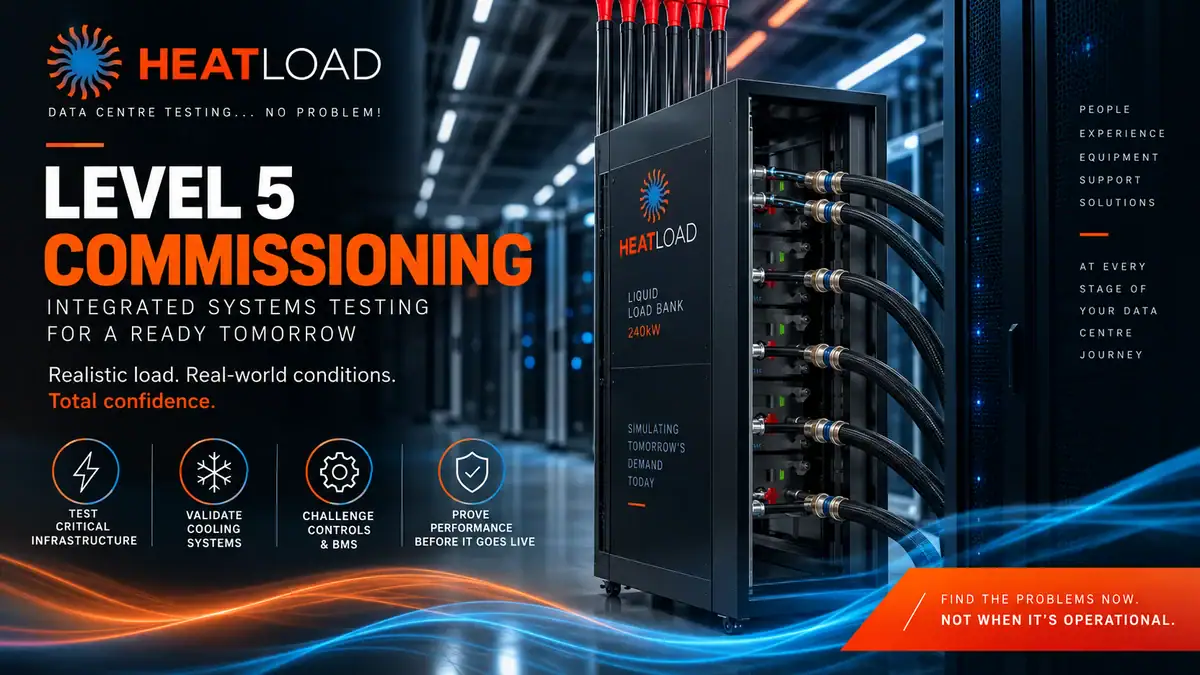
That challenge led Heatload to develop the LBR-240 Liquid Load Bank. Rather than simply adapting an existing electric boiler and calling it a load bank, our objective was to develop equipment specifically around the requirements of commissioning Direct-to-Chip data centre infrastructure.
The LBR-240 is a 240kW, 48U rack-based liquid load bank solution, incorporating eight modular 30kW liquid-cooled load banks connected to an internal manifold with a 2-inch connection that can be tailored to suit the customer’s site TCS connection.
This gives commissioning teams the ability to simulate current and emerging AI rack configurations.
Importantly, this doesn’t have to be considered separately from the air-cooled elements of the facility. Heatload’s existing floor-standing emulators can be deployed alongside the LBR-240 to replicate supporting racks within an AI pod, helping create a more representative commissioning environment.
The result? A more realistic representation of the thermal conditions the data centre could experience when the real IT equipment goes live.

Contamination
Introducing temporary commissioning equipment into a Technology Coolant Loop creates another understandable concern for customers, that of introducing contaminates.
Contamination can create a significant commissioning and operational risk, which is why this consideration has formed part of the LBR-240’s development rather than being treated as an afterthought.
Drawing on Castrol ON’s coolant expertise, Heatload has developed processes designed to ensure our load banks do not introduce contaminants into customer Technology Coolant Loops.
We’ve also worked to minimise the volume of coolant contained within the LBR-240, helping to reduce the amount of flushing waste generated during the commissioning process.
The LBR-240 is certified for use with Castrol PG-25 coolant, with other coolants sharing the same chemical formula also compatible.
These may appear to be relatively small considerations when looking at an entire data centre project, but they represent exactly the kind of practical challenges commissioning teams need to address when transitioning from air to liquid.
Collaboration
One of the biggest lessons we’ve learned during the development of the LBR-240 is that the industry’s transition to liquid cooling cannot happen in isolation.
The technology touches multiple stakeholders — data centre owners, end users, commissioning consultants, design consultants, contractors, technology manufacturers and equipment suppliers.
That is why collaboration has been central to the development of the LBR-240. Feedback from across the industry has helped us understand not just what a liquid load bank needs to do on paper, but what commissioning teams actually need when they arrive on site.
Because ultimately, the equipment is only part of the solution.
Experience matters too.
Bringing Heatload’s commissioning experience into the liquid era
Heatload has spent decades working alongside commissioning teams, contractors and data centre operators to create realistic testing environments before facilities become operational.
We’ve watched testing requirements move from relatively low-density environments to increasingly complex, high-density infrastructure.
We’ve adapted our equipment accordingly.
Now we’re doing the same for liquid.
Our role isn’t simply to deliver a liquid load bank to site. It’s to understand what the customer is trying to prove, the environment being commissioned and how representative load can help identify issues before they become operational problems.
For Level 5 testing in particular, this becomes increasingly important.
The value of IST comes from understanding how the whole facility responds together. As cooling architectures become more complex, representative testing becomes more important — not less.
Finding the problems before the IT arrives
Ultimately, liquid cooling doesn’t change the fundamental purpose of commissioning.
It changes what needs to be tested and how it is tested.
The goal remains to identify potential problems before the facility becomes operational.
By recreating representative thermal loads during commissioning, engineering teams can investigate how their infrastructure performs under realistic conditions and build greater confidence in the facility before valuable live IT equipment is introduced.
For customers making the transition from air to liquid, that confidence is critical.
New technology inevitably creates new challenges. The answer isn’t to reduce the level of testing because the systems are unfamiliar. It’s to develop better ways of testing them -that is exactly what Heatload intends to do.
As data centre design continues to evolve, we’ll continue listening to customers, working collaboratively with the industry and developing the equipment and expertise commissioning teams need to test tomorrow’s infrastructure.
From air to liquid, the principle remains the same: prove it before it goes live.
Data Centre Testing… No Problem!